
The bar for impact doesn’t shift
Small Steps Vol. 124: On energy shocks, bespoke cancer cures and healthcare's great defection.
What we’re thinking about
How we think about AI
By Will Richardson
There’s an interesting dialogue across the impact investing community right now. As an industry, we’re founded on the premise that technology is fundamental to addressing the world’s greatest challenges. And that, by and large, is true. You only have to look at how much society has improved for the better in the past 100 years to see that’s the case.
Yet, while its potential is immense, for the past year it feels as if artificial intelligence -- one of the most transformational technologies we’ve seen to date - has only really been raising eyebrows around the globe.
In the past few months alone, reports have emerged that the energy requirements for the data centres fuelling AI’s growth will undermine country emissions targets. We’ve seen major companies like Block and Atlassian wholly attribute job cuts to the rise of AI. And that’s not even mentioning the questions raised by the Iran War, where AI-enabled targeting systems drove Pentagon decision-making at unprecedented speed and where a failure to update a military database contributed to the killing of nearly 180 schoolgirls.
All of this, and more, is eroding the sheen of the narrative tied to this technology, and is raising important questions on its use, future and who exactly should support it.
It’s fair to say that some who are huge proponents of what impact investing represents may be surprised to hear that, as an impact investor, I’m still very bullish on the potential of AI. And I wanted to take the opportunity to explain both why, and how as a fund, we’re thinking about it.
AI may be automating intelligence, but it cannot replicate judgment. It is judgment, not intelligence, that determines whether technology creates real impact.
Chess vs Poker
For a long time, we equated intelligence with human distinctiveness. To think, reason, and create: these were the markers of our humanness, and the things that separated us from every other kind of system in the world. Now machines can replicate many of those outputs convincingly, and they are getting better at it quickly. The question that follows is deeply human. If intelligence can be automated, what exactly remains uniquely ours?
I think the answer lies in judgment.
Annie Duke, in Thinking in Bets, makes an important distinction here. Life, she argues, is less like chess and more like poker. An apt analogy given some of the first signs of sophistication with AI emerged decades ago on the chess board.
In chess, all the information is on the board. In poker, you are making decisions under uncertainty, with incomplete information, against other actors whose intentions you can’t fully read. You assess probabilities, weigh what you know against what you don’t, and you act anyway.
A good decision can still lead to a poor outcome through no fault of your reasoning, and the quality of your thinking can only really be evaluated over time, across many decisions, not by any single result.
AI systems are remarkably good at the chess version of problems: pattern recognition, optimisation, synthesis across vast bodies of information. But life, and especially leadership, is mostly poker. We rarely have complete information. The trade-offs are real and often painful, and the consequences of our choices fall on people, not on spreadsheets. Unlike a model that outputs a recommendation and moves on, we live inside the outcomes of our decisions. We carry them. That weight sits at the core of good judgment.
Our measurements haven’t changed
This is the lens through which we assess the companies we back at Giant Leap. We ask a specific question: is there a direct, measurable line between this company’s revenue and a positive outcome for people or the planet? Most AI tools targeting enterprise customers with efficiency and automation don’t pass that test, not because they are harmful, but because they don’t move the needle on the things we care about.
The companies we back have to clear a different bar. They should be using AI as a competitive advantages to give them the best chance to succeed, but their priority has to be on solving genuinely hard problems: decarbonising aviation, supporting parents navigating their children’s complex health needs, improving outcomes for women’s health, plugging the gaps left by governments contracting their spend on disability care. These are areas where technology is not simply replacing human value or optimising for efficiency, but extending it to people who otherwise would not have access.
We are also thinking carefully about the environmental cost of the AI we fund. One of our portfolio companies, Ovum, is an AI health assistant built specifically for women, giving them a non-judgmental space to track symptoms, manage health records, and advocate for themselves with their doctors. The value it delivers is deeply personal and targeted. That means the infrastructure required to deliver it is proportional to the impact it creates.
None of this makes me naive about the broader landscape. I have no doubt that there are other investors who are very keen to see more capital flow into AI for labour displacement. But I also believe that the answer to a technology being used to destabilise our rules-based order is not to step back from it. It is to put capital behind the people using it well, and to make those examples visible. And to be honest, we don’t see enough of them in the headlines right now.
The founders building in climate, health and education carry real weight. They are operating in the poker version of the world: making consequential decisions under uncertainty, for people whose lives depend on getting it right. That judgment, that willingness to carry the outcomes, is exactly what AI cannot replicate. And it is exactly what we are backing.
For the road
🗺️ The map half a billion people made without knowing it. Five hundred million Pokémon Go players spent years pointing their phones at the world and in doing so, mapped it. Niantic Spatial turned 30 billion urban images into a positioning system accurate to centimetres, now helping Coco Robotics deploy last-mile delivery robots. The dataset didn’t set out to be infrastructure. It just turned out that a decade of real people moving through real places is exactly what physical AI needs (note: paywall; alternative article here). If physical AI has your attention, Antler explores why we’re now at an inflection point.
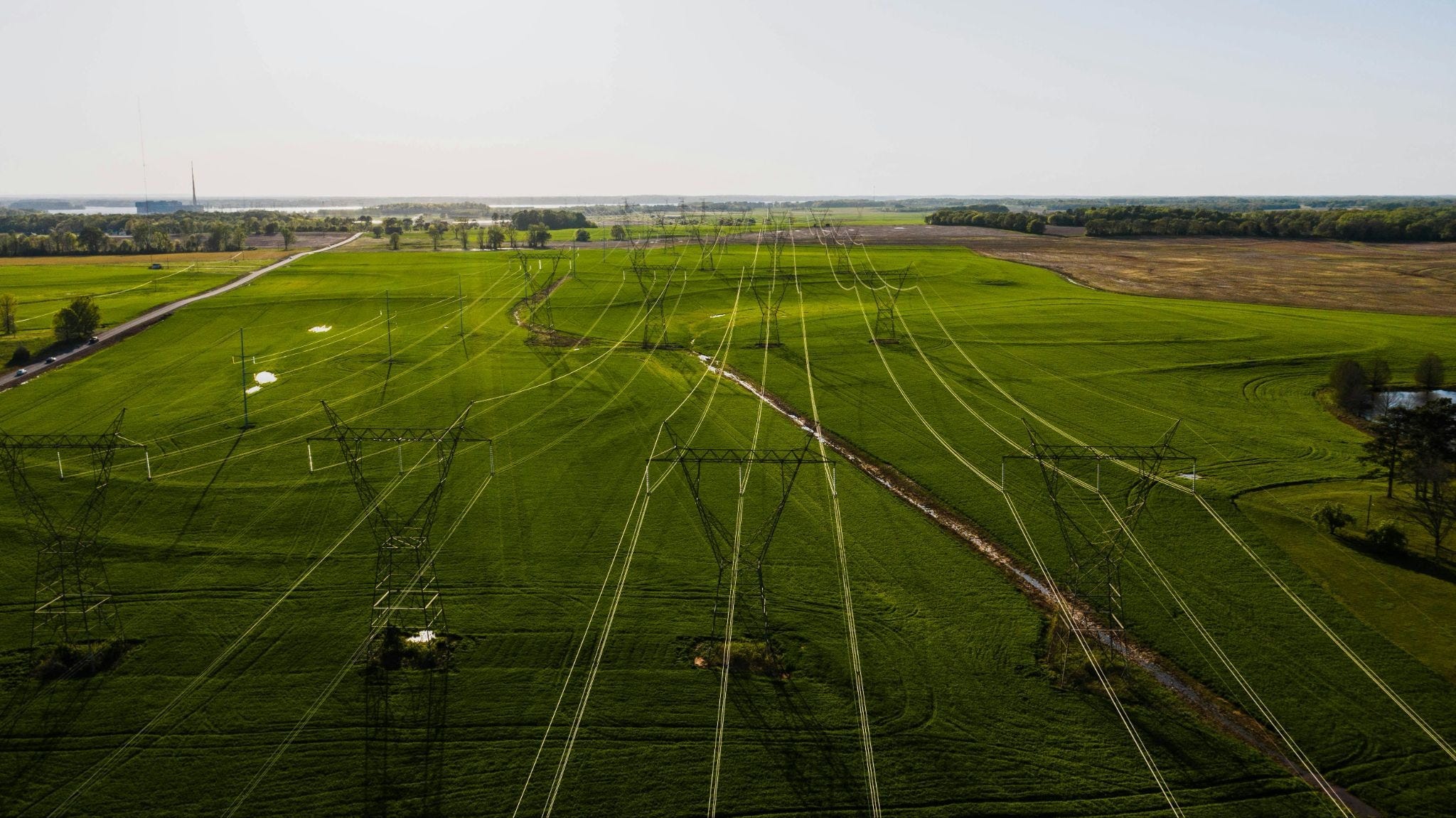
⚡ The New Joule Order. Iran’s blockade of the Strait of Hormuz has put 18 million barrels per day on hold in what the Carlyle Group is calling it the largest energy supply shock in history. It’s made the priority order impossible to ignore: security first, affordability second, sustainability third.
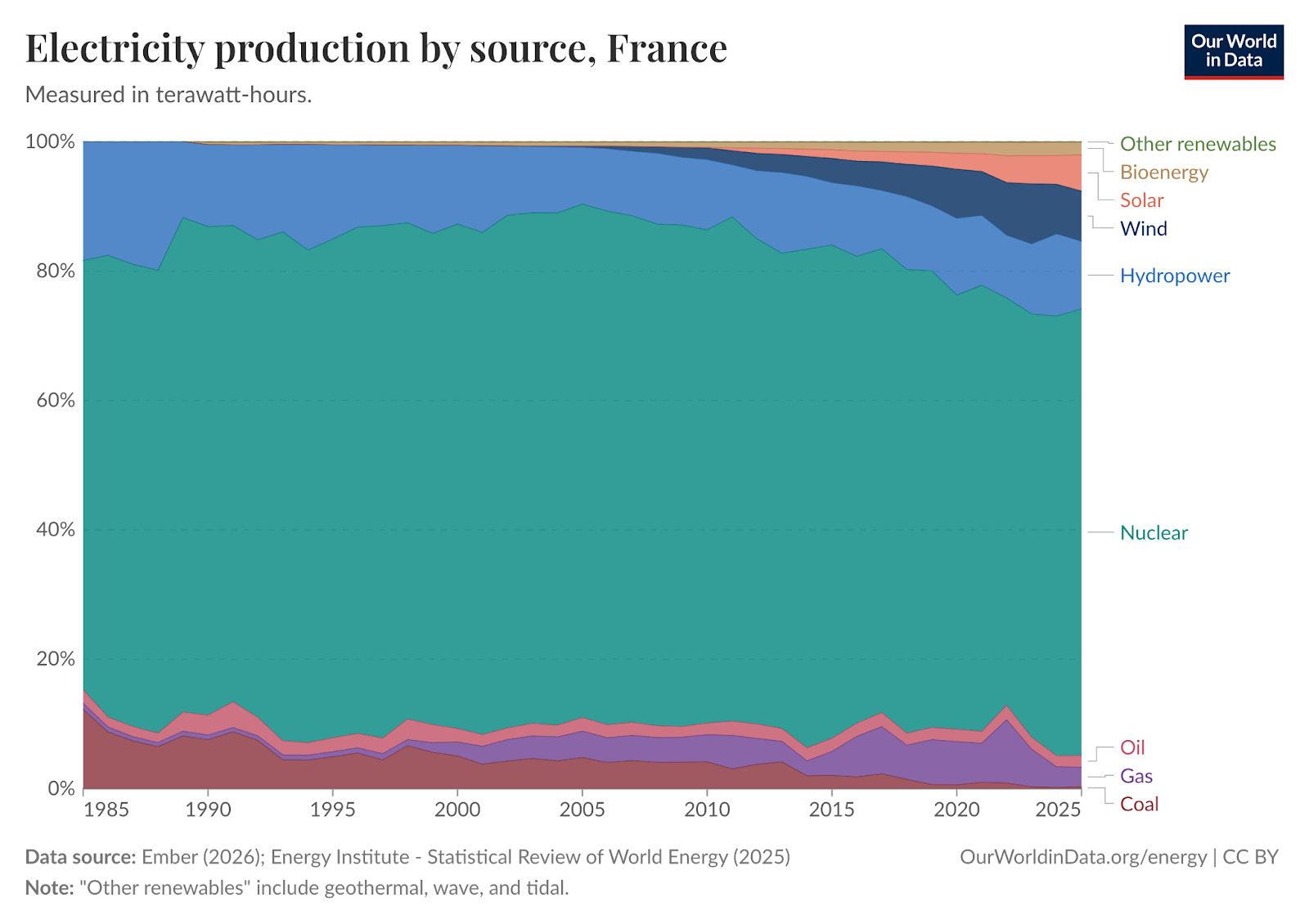
Energy transitions move faster when survival is the motivation. After 1973, France built one of the world’s largest nuclear fleets not to save the planet, but to never depend on someone else’s oil. Today, it has one of Europe’s lowest-carbon grids. The energy transition is reaccelerating, but just not for the reasons we expected.
✈️ Impact built in, not bolted on. In 2025, Intrepid Travel posted US$575 million in revenue while distributing US$2.4 million to 58 grassroots organisations across 45 countries. Every trip is linked to a local nonprofit and every admin cost absorbed by Intrepid. Most giving is designed around a separate ask. Intrepid didn’t change what people value. Instead, they just removed the moment where giving becomes a separate decision. Where else could this model work? The full piece maps out what it takes.
🧪 Vibe physics. Harvard physicist Matt Schwartz used Claude to compress two years of theoretical research into a fortnight. He calls it “vibe physics”. The calculations get offloaded, but the human brings the taste for which direction is actually worth pursuing.
🧬 He ran out of standard treatment options. So he built his own. We previously shared a story about a man and his dog. Sid Sijbrandij is a similar kind of story. GitLab’s co-founder was diagnosed with a rare bone cancer, exhausted standard care, and then built his own treatment, using AI to do the research that would normally take a whole team. His cancer is now in remission. Sid documented his journey in a slide deck, but you can also read the full story here.
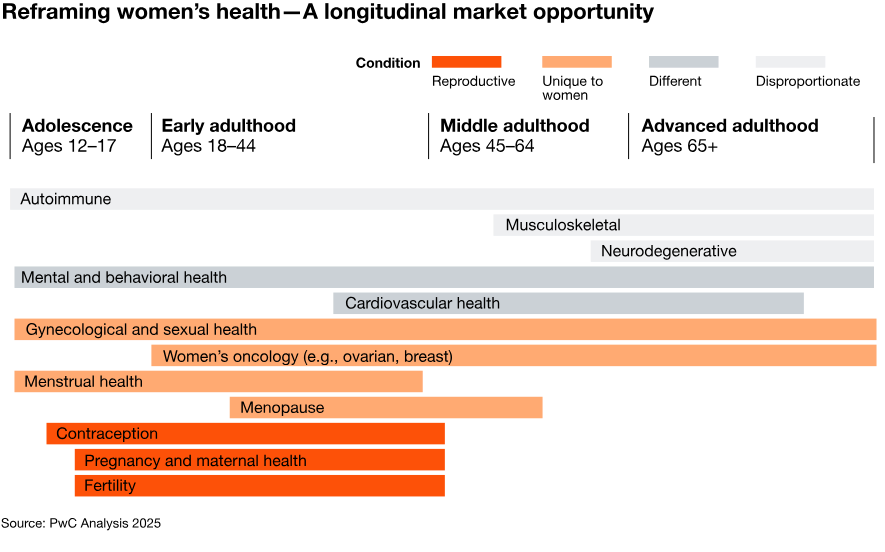
💊 The $600 billion market that’s still being undercounted. PwC put the women’s health market at $430-440 billion today, growing to $600 billion by 2030, and then admitted that even that was probably an underestimate. Some great charts in this report include one that maps women’s health across a whole lifetime and reveals what’s been missed: autoimmune conditions starting in adolescence, cardiovascular risk through midlife, neurodegenerative into advanced age. We went deep on this.
🔬 The first AI-written paper just passed peer review in Nature. Sakana AI’s AI Scientist runs the whole research cycle, from hypothesis, experiment to write-up, and its paper just cleared peer review in Nature. It’s not without its limitations - the output is “modestly original and citations were hallucinated. But a system that uses its own discoveries to get better at making discoveries could facilitate a different kind of scientific progress.
In your ears
🎧 People are building their own healthcare systems. High premiums, 40-day wait times, claim denials. More Americans are skipping insurance and assembling their own stack: cash pay diagnostics, AI prescribing and wearables. Out-of-Pocket’s Nikhil Krishnan and a16z’s Jay Rughani on where that’s heading and what it means for the system left behind.
🎧 The company that invented the future and forgot to use it. Google employed virtually every AI pioneer, published the Transformer paper, and built the infrastructure the entire industry runs on. Then ChatGPT launched and the world acted like they’d never heard of them. Ben and David from Acquired unpack how that happened and whether the best-capitalised company in history can disrupt itself without breaking what it is.
🎧 Moving the Middle. Most conversations about gender equality target the already-convinced. The Gender Compass focuses on the “moveable middle”: Australians whose views aren’t fixed, but who hold the real power to shift the national conversation. This series is part data, part real stories, and genuinely useful if you’re trying to make these conversations land in rooms that aren’t already on board.
Helpful resources
💰 Looking for healthcare grant funding opportunities? Richard Macliver from CICA Lab has created a dashboard that tracks them all in one place.
Giant leaps
🌿 Listen to Conserving Beauty founder Natassia on KICPOD: not just about the brand’s recent rebrand but about the harder stuff: navigating personal loss, challenging the internal voice, and what it actually means to build a business while figuring out who you want to be. Listen here.
🎒Listen to Ben Sze on the Old Haileyburians Association Stay Connected Podcast: EdRolo co-founder, Teacher’s Buddy co-founder and Haileybury class of 2002. Not just about the ventures but about loss, recovery, and what brought him back to where it started.
New paths
🔋 Amber Electric is hiring for across roles from Strategy & Operations Analyst (Melbourne), Senior Full Stack Engineer (UK), Legal Counsel (Melbourne), Senior Software Engineer (Melbourne), Compliance Specialist (Melbourne) and Strategic Account Manager (Europe).
🧻 Who Gives A Crap is hiring a Lifecycle Marketing Analyst (Remote), Director of Brand Growth, US (Remote), Influencer & Partnerships Manager, UK (Remote) and Performance Creative Lead, US.
Save the date
📅 April 16: EnergyLab’s Pathways Into Net Zero - Melbourne. Register here.
📅 April 30: Blackbird’s Sunrise Festival - Sydney. The Giant Leap team will be attending - come along and say hi! Buy tickets here.
📅 May 5-7: Wisdom & Action Forum 2026: Trust in the Age of AI - Melbourne. Small Giants Academy brings together 300 cross-sector leaders to explore what trust, technology and human connection look like as AI reshapes society. Express your interest here.
📅 May 7: Submissions for the Amazon Sustainability Pilot Program close. The program is designed for climate tech startups working on sustainability challenges across large-scale supply chains and will pitch directly to Amazon teams for North American pilot opportunities. Apply here.
📅 May 20-21: Digital Health Festival - Melbourne. DHF brings together the most influential leaders and innovators in healthcare with over 8,000+ attendees. Rachel Yang is speaking at the ‘Unlocking investment into women’s health’ session. Buy tickets here.
📅 May 21: Apply for the MIT Solve 10th Anniversary Global Challenge. The challenge will identify ten bold solutions to scale with $100,000 in unrestricted funding and a stage during NYC Climate Week. Find more details here.
📅 May 28: Apply for the Future Investment Initiative Innovators Pitch. For builders using AI in Robotics, Sustainability, Health, and Education. Apply here.