

Kick start
We’re excited to share our investment in Clean Slate Clinic, a virtual platform that delivers doctor-led alcohol and drug detox from home at a fraction of the cost of inpatient care.
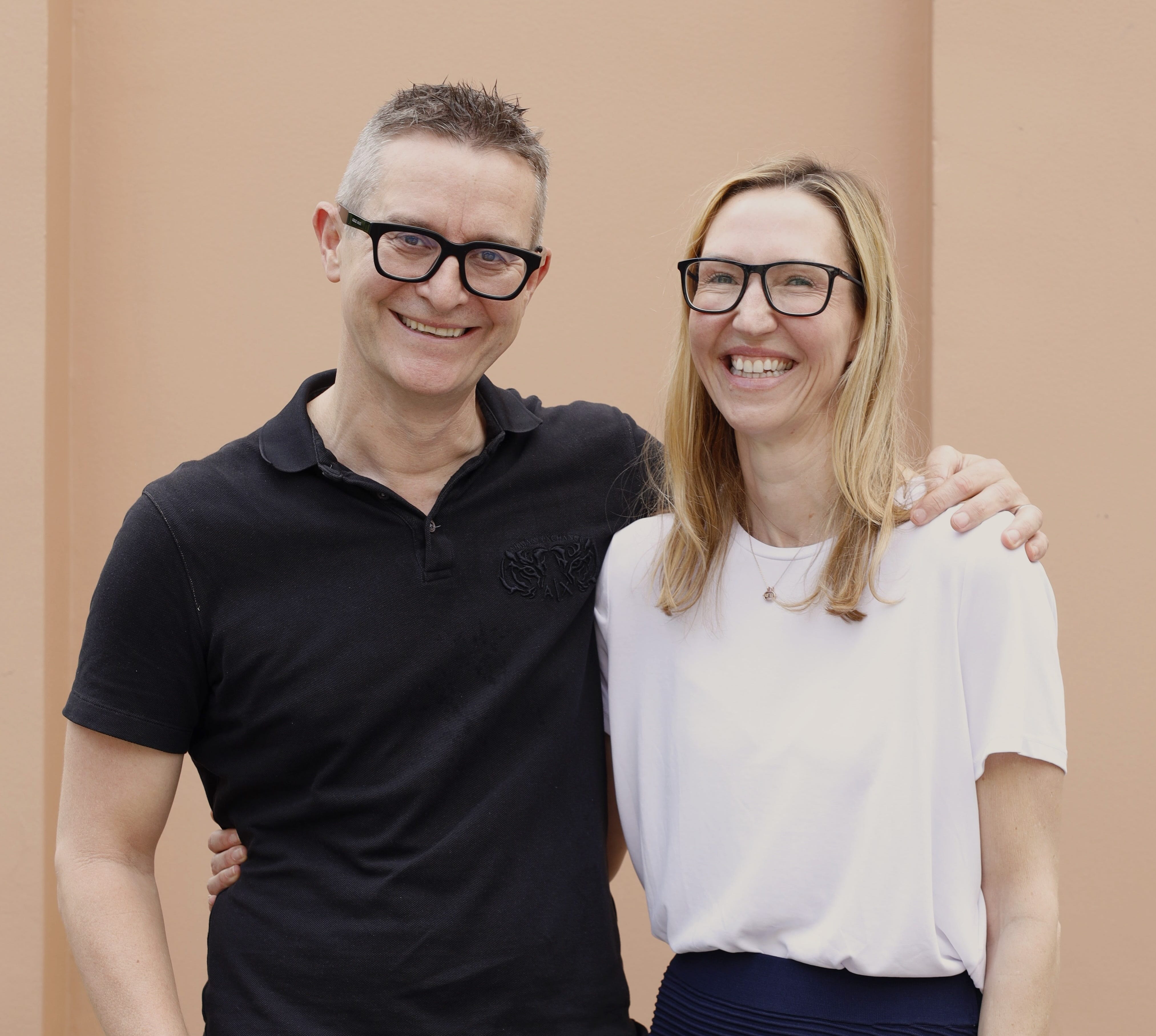
Clean Slate began with a founder who understood the problem from both sides. Pia Clinton-Tarestad is a health economist who completed Clean Slate’s own program before co-founding it alongside GP and Addiction Medicine Specialist Dr Chris Davis. Together they built what the existing system couldn’t: clinically rigorous, doctor-led detox and recovery care that people can access from home, at a price they can actually afford. More than 3,000 clients have now completed the program, with a relapse rate of 7% at three months.
Read our full Theory of Change for Clean Slate here. You can read more about Clean Slate’s raise on Capital Brief (note: paywall) and Startup Daily.
Clean Slate is also running a campaign to push for better alcohol care in Australia. If you’d like to add your voice, sign their open letter to the Prime Minister, Treasurer and Minister for Health.
What we’re thinking about
Running hot
By Joanna Lee
Earlier this year, Will wrote about why we remain bullish on AI as a force for positive impact, and why judgment, not intelligence, is the thing that determines whether it gets used well. This piece is a companion to that one, focused on a question that’s come up a lot since: what about the environmental cost?
It’s a fair question, and the cost is real. To think it through, we’ve been drawing on the work of Reframe Venture, who brought together academics, asset owners and venture investors in London last year to map the possible futures of AI’s impact on the climate over the next decade. Their conclusion is that neither path on offer is inevitable. The direction of travel is still being shaped, at real decision points, by people making real choices.
The energy requirements for the data centres driving AI’s growth are significant and growing. According to the IEA, electricity consumption from data centres could more than double by 2030. On paper, renewables will make up more than half the new capacity built to meet that demand. But data centres need power around the clock, so fossil fuels are still projected to supply 64% of the electricity that actually gets used. At a moment when emissions need to be falling sharply to stay within 1.5 degrees of warming, data centre demand is pushing in the opposite direction. There’s also a water problem too: data centres consume millions of litres of water for cooling, often in regions where it’s already scarce.
What makes this more complicated is the risk of overbuilding. IT equipment in a data centre becomes obsolete within four to six years, and industry analysts are already warning that demand projections may be inflated. Build too much, too fast, and the environmental cost isn’t the only concern. You get stranded assets and destroyed capital alongside it. It wouldn’t be the first time. The 1990s to early 2000s fibre optic boom is a reference point: billions poured into infrastructure for demand that was real but years away, and when the bubble burst, the capital destruction was enormous.
Reframe maps two broad paths from here. In the worst one, the build-out continues unchecked, geopolitical competition keeps governments favouring larger and more complex models over sustainable ones, and efforts to legislate against data centre growth ramp up but fail to become law. AI’s capacity to actually accelerate climate progress across materials discovery, grid optimisation, industrial emissions reduction goes largely unrealised.
In the better one, some of the conditions for a different outcome are already forming, though it’s early. Enterprise procurement starts demanding sustainability metrics. The EU AI Act mandates energy efficiency disclosures. Salesforce, working with Hugging Face and Carnegie Mellon, has already released a benchmarking tool giving AI models a 1-5 energy efficiency score. Small language models, which require a fraction of the compute of large ones and carry co-benefits for privacy and bias, attract more serious investment. Whether any of this amounts to a genuine shift in direction is the open question.
Reframe recommends that investors push founders toward a full-system approach from the earliest stages, asking hard questions about energy mix and environmental trade-offs alongside model performance. We think that’s right in principle, but the levers with the most reach are probably policy ones: regulation, procurement standards and government mandates.
For data centres specifically, the building and construction industry is instructive. NABERS and Green Star ratings didn’t emerge from voluntary action. They were mandated, embedded in procurement requirements, and they changed the economics of building. Energy efficiency standards backed by government rules could do the same. No global standards exist today. Current benchmarks like Power Usage Effectiveness measure how efficiently a facility uses energy but say nothing about where that energy comes from. A highly efficient data centre could still run on a carbon-intensive grid. Singapore’s Green Data Centre Roadmap points toward something better: project approvals and incentives tied to renewable integration, not just efficiency scores.
Within the better path, there are also real investment opportunities. For data centres, greener increasingly means cheaper power, faster project approvals and better reliability. Long duration storage and waste heat reuse are also emerging areas to watch: General Atlantic’s recent white paper on green data centres maps the landscape in detail if you want to go deeper. Separately, there are small language models that cut AI’s energy footprint, and AI built specifically for climate outcomes: from grid management, industrial emissions reduction to materials discovery.
The AI and climate story isn’t written. The Reframe analysis is a useful map of where the branch points are, and a reminder that the decisions made in the next few years, by investors and founders alike, are the ones that will determine which version we’re living in a decade.
Read the full Reframe Venture scenario analysis at reframeventure.com/ai-climate-scenario
For the road
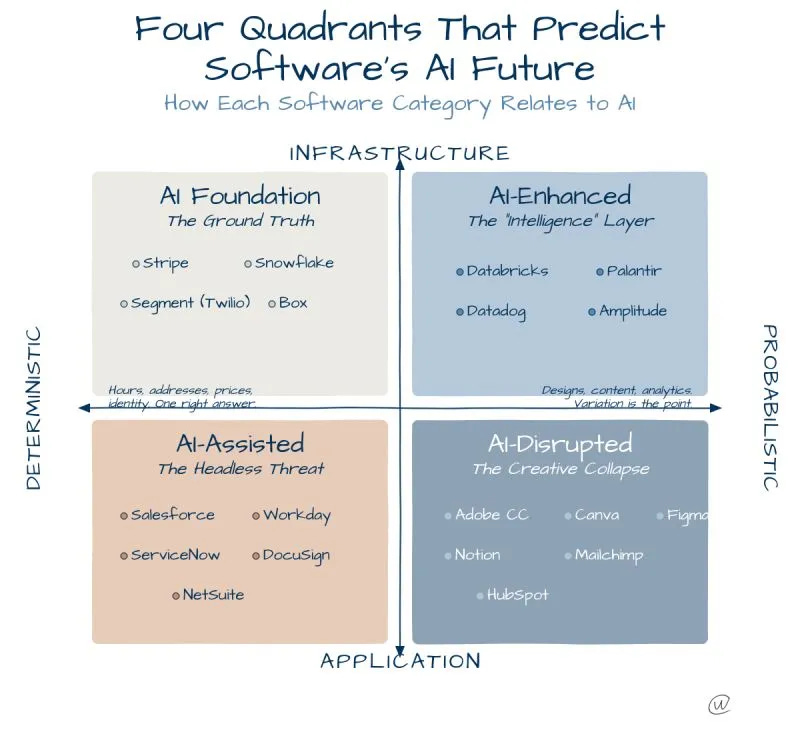
🗺️ Not all software is equally scared. The $285 billion software selloff triggered by Claude Cowork produced a lot of hot takes. This four-quadrant framework, mapping software across deterministic/probabilistic and infrastructure/application axes, is worth a few minutes of your attention. Read more here.
🌿 The world is losing its smells, and we’re barely noticing. Pollution, warming and biodiversity loss are erasing scents across the world, and most people won’t register what’s gone. Smell is deeply connected to memory, cultural identity and health, and some of the stakes are profound: for Afro-Brazilian communities practising Yoruba traditions, smell was the single element of ancestral culture to survive enslavement. Scientists are still working out how much we stand to lose.
🧠 The terms of service for your brain. Chile’s Supreme Court issued the world’s first ruling on commercial neurodata when a senator discovered his focus headset’s terms of service had granted the manufacturer a worldwide, irrevocable, perpetual licence over his brain data. The court ruled it violated his constitutional right to mental integrity. The broader concern is how little users understand what they’re signing away, in a consumer market projected to hit $55 billion within a decade, with legal and ethical frameworks still catching up.
🤖 A man paralysed from the neck down runs a café robot from his bedroom in Kyoto. At Tokyo’s DAWN Avatar Café, homebound disabled people remotely operate robots that greet, serve and converse with diners. It’s one example of something broader: 92% of Koreans believe robots should have social roles, compared to 53% of Americans who see them as tools. One sociologist argues the difference is cultural, maybe even spiritual. In Asia robots are soul-possible, in the US they’re soulless. Read more here.
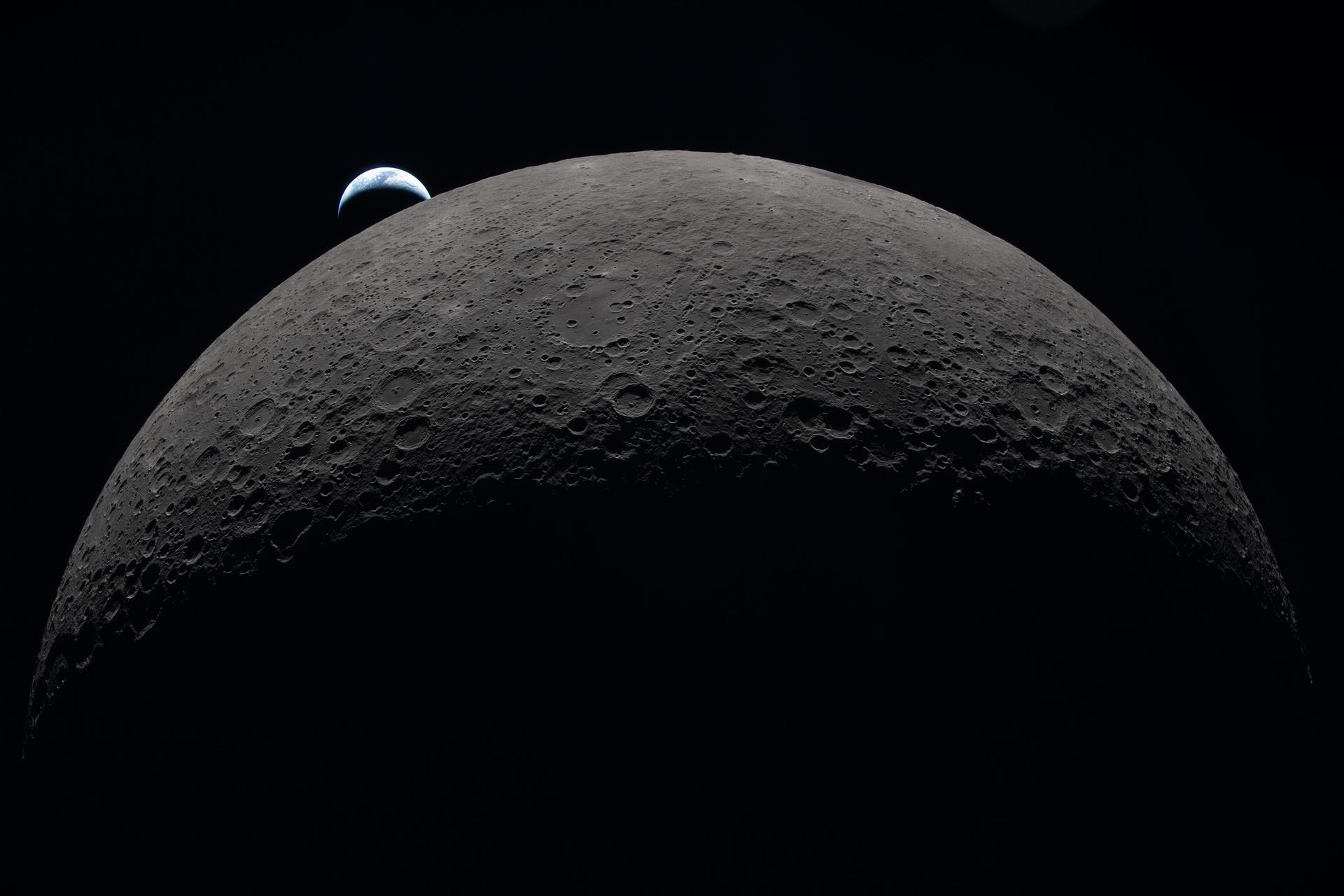
🌕 Hi Earth. On April 6, NASA’s Artemis II crew became the first humans near the Moon in more than 50 years. Check out the imagery here.
If the coverage has left you wondering why we’re actually doing this, the Science Vs podcast went looking. The lunar gold rush (rare earths, Helium-3) mostly doesn’t hold up. What does: the Moon is close enough to practice living somewhere that isn’t Earth before attempting Mars that is six months away, and a telescope on the far side, shielded from our atmosphere, could finally tell us how the first stars were born.
🏗️ What it actually looks like when a company of thousands goes AI-native. Manik Surtani, Head of Open Source at Block, gives a rare inside account: non-engineers shipping their own tools without waiting on engineering, AI review running before code reaches a human, Jack Dorsey rethinking the org chart itself. And a clear message for founders: choose open source and open standards wherever you can. The field is still being shaped.
🔬 Science doesn’t actually work the way the movies say it does. The lone genius who overturns everything we believed - it’s a compelling story but in practice, they’re rare. When they do happen in mature fields, politics usually has a hand. WHO declared COVID was not airborne in March 2020; aerosol researchers disagreed immediately and were dismissed. 18 months of evidence later, the agency reversed. The reason it took so long: WHO had spent decades dismantling “bad air” theories of disease, and admitting the air itself could carry COVID felt like going backwards.
🚢 The ship that runs on fertiliser. Shipping accounts for nearly 3% of global greenhouse gas output and is one of the hardest sectors to decarbonise. HD Hyundai Heavy Industries just released the world’s first ammonia-powered vessel. Ammonia contains no carbon, meaning it does not produce CO2 when burned, and its practical advantage over hydrogen comes down to supply chains: it’s already produced at scale for fertilisers, meaning the infrastructure to move it globally largely exists.
Helpful resources
🐌 Slow VC has packaged their investment thinking into two downloadable files: a knowledge base covering how they evaluate businesses, and a system prompt you can drop into Claude or ChatGPT alongside your pitch deck.
Giant leaps
⚡ Amber ran the numbers on what it actually costs to own and run a petrol vs electric car in Australia in 2026. Check it out here.
🚛 Who Gives A Crap just completed the first fully electric freight delivery from Sydney to Canberra, from distribution centre to customer door, on a single charge. Watch here.
🧵 Evrnu founder Stacy Flynn recently gave a TED talk. Listen here on building a garment recycling facility in a region that once produced half the world’s cotton.
New paths
⚡Amber is hiring across a range of roles including Executive Assistant & Office Manager (Melbourne), Customer Operations Manager (Melbourne), Strategy & Operations Analyst (Melbourne), Legal Counsel (Melbourne), Senior Software Engineer (Melbourne) and Compliance Specialist (Melbourne).
🧻Who Gives A Crap is hiring across a range of roles including a Director of Brand Growth, US (Remote), Influencer & Partnerships Manager, UK (Remote) and Lifecycle Marketing Analyst (Remote).
🤖Indi is hiring a Full Stack AI Engineer (Remote).
🧠Foremind is hiring a Clinical EAP Manager (Remote).
Save the date
📅 April 27: LIFTWOMEN’s Asia Pacific Female Founders Grant Pitch Night - Melbourne. 10 women-led APAC founders pitch for grant funding. Register here.
📅 April 27: Anthropic x Square Peg AI Founder Salon - Melbourne. Anthropic’s Head of Product and Head of Engineering (Claude Developer Platform) in conversation with leading Australian founders. Currently waitlist only.
📅 April 30: Blackbird’s Sunrise Festival - Sydney. The Giant Leap team will be attending - come along and say hi! Buy tickets here.
📅 May 5-7: Wisdom & Action Forum 2026: Trust in the Age of AI - Melbourne. Small Giants Academy brings together 300 cross-sector leaders to explore what trust, technology and human connection look like as AI reshapes society. Express your interest here.
📅 May 20-21: Digital Health Festival - Melbourne. DHF brings together the most influential leaders and innovators in healthcare with over 8,000+ attendees. Rachel Yang is speaking at the ‘Unlocking investment into women’s health’ session. Buy tickets here.
Open for applications
📬 TAV Venture Fellows is a year-long program from Tin Alley Ventures for ten University of Melbourne students who want an unfiltered look inside startups and VC. No business idea or prior connections required. Apply here.
📬 May 7: Submissions for the Amazon Sustainability Pilot Program close. The program is designed for climate tech startups working on sustainability challenges across large-scale supply chains and will pitch directly to Amazon teams for North American pilot opportunities. Apply here.
📬 May 18: Apply for the UNSW Founders 10x Accelerator. $100K uncapped SAFE investment, expert coaching, and UNSW’s R&D ecosystem. Health and climate accelerator programs are open to any startup in Australia. Apply here.
📬 May 21: Apply for the MIT Solve 10th Anniversary Global Challenge. The challenge will identify ten bold solutions to scale with $100,000 in unrestricted funding and a stage during NYC Climate Week. Find more details here.
📬 May 28: Apply for the Future Investment Initiative Innovators Pitch. For builders using AI in Robotics, Sustainability, Health, and Education. Apply here.